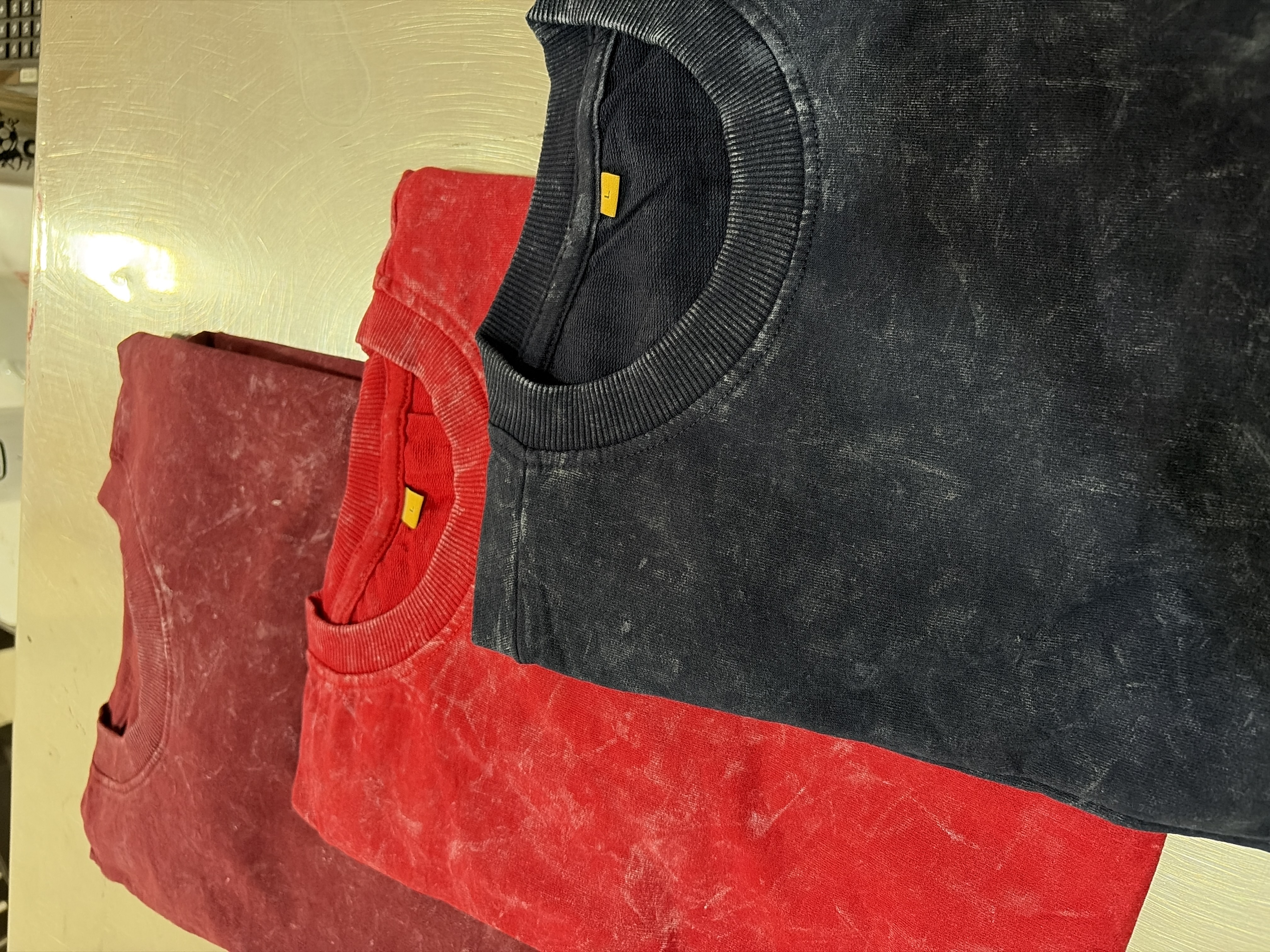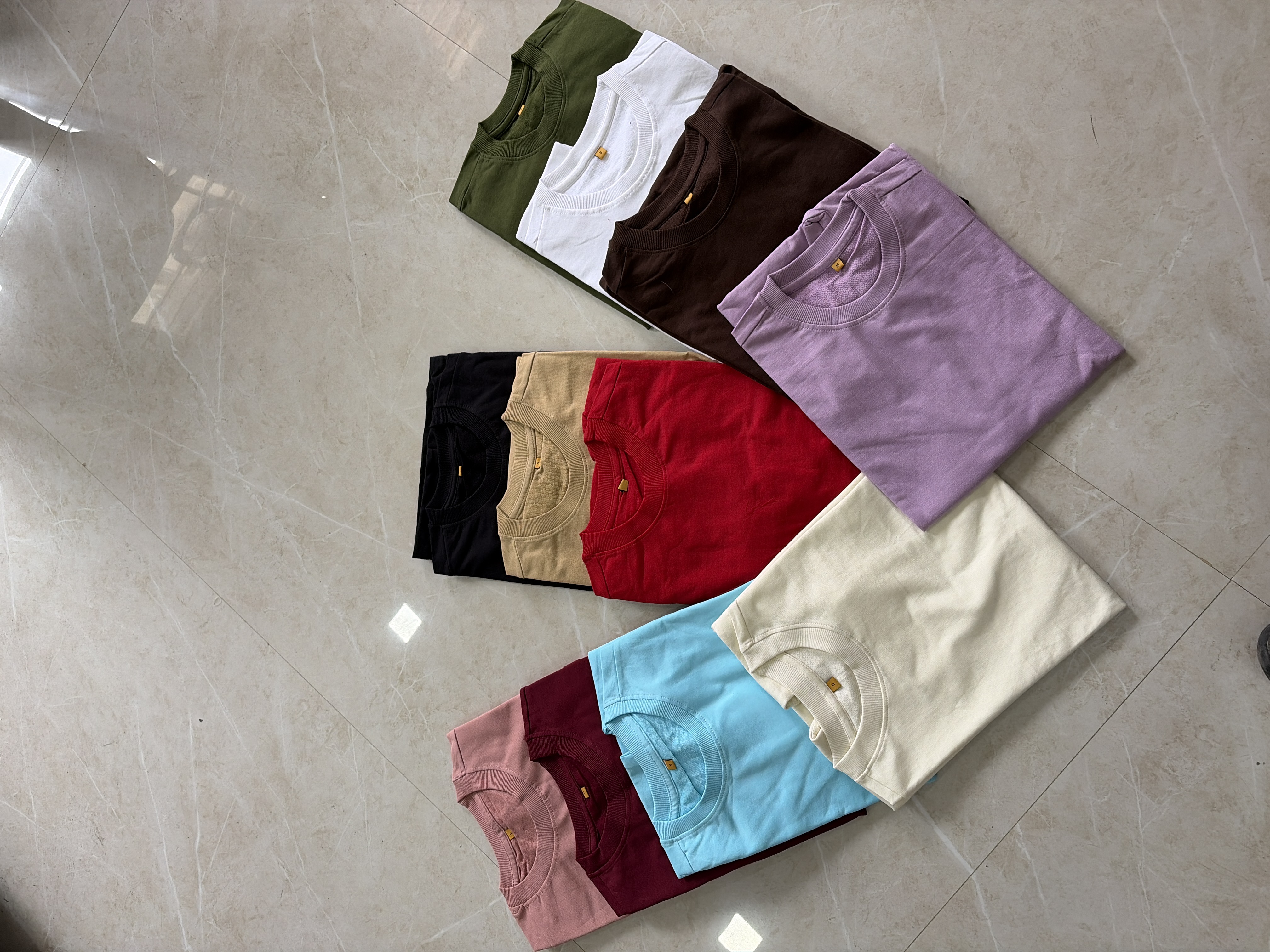
The Manufacturing Process of Acid / Mineral Wash
Unlike fabric-roll dyeing, acid washing is strictly a garment-dye technique executed on fully stitched blank apparel. Highly porous volcanic pumice stones are soaked in a chemical oxidizer solution (typically potassium permanganate or chlorine bleach) until saturated, then drained until chemically damp rather than wet.
The sewn cotton garments are loaded into an industrial front-loading dry-tumbler drum alongside the prepared stones. As the drum rotates, the stones strike the exterior folds and seams of the garments. The oxidizer chemically bleaches away the surface dye wherever the stone makes contact, leaving the recessed interior fibers deeply pigmented.
Following tumbling, the garments are instantly doused in a neutralizing chemical bath (sodium bisulfite) to halt oxidation, followed by heavy fresh-water rinses to restore neutral pH 6.5–7.0 and prevent fabric degradation.
Why Acid Wash Dominates Streetwear Collections
Modern streetwear brands utilize acid wash to achieve distinct premium market positioning. Every single piece emerging from the stone tumbler carries unique, unrepeatable marble striations, giving consumers the perception of owning a 1-of-1 bespoke garment.
Furthermore, because the garments undergo extreme mechanical tumbling and neutralization, the cotton fibers emerge exceptionally soft with zero residual garment shrinkage. It pairs impeccably with 240 GSM drop-shoulder streetwear blanks.